
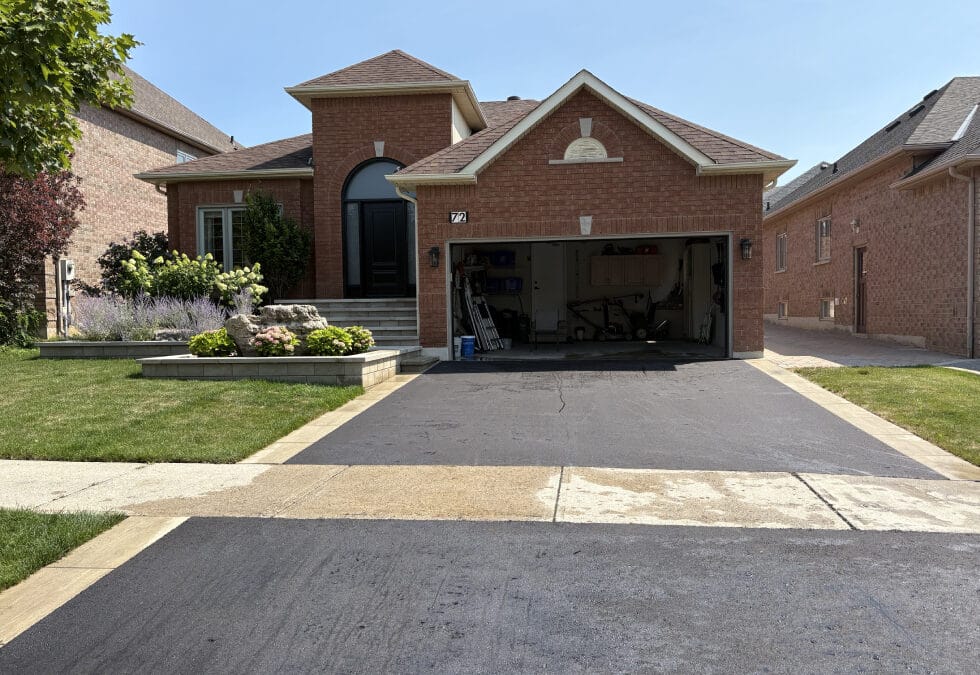
Asphalt life can typically be extended by 5-10 years through regular maintenance and sealcoating, sometimes more. The key is timing; a protective barrier against water, UV rays, and chemicals that cause cracking and deterioration is created by sealcoating every 2-3 years. For most GTA homeowners, this means 15-20 years are gotten from their driveway instead of just 8-12 years without proper care.
Fast Facts
- Sealcoating costs roughly $0.15-$0.25 per square foot vs. $3-$5 per square foot for replacement
- Asphalt life can be extended from 10 years to 20+ years through proper maintenance
- 80% of premature asphalt failure in Ontario’s freeze-thaw cycles is caused by water damage
- Their first sealcoat is needed by most driveways 12-18 months after installation
- Small issues are prevented from becoming major repairs through regular crack sealing
Why Maintenance Matters More Than Most People Think
Walk through any Vaughan neighborhood; the difference is spotted immediately by you. Some driveways look fresh and smooth after 15 years, while serious cracking and crumbling are shown by others after just 8. Regular maintenance usually comes down to the difference. But here’s what catches many homeowners off guard – looks aren’t the only thing it’s about.
Small cracks are gotten into by water, and freezing happens during Toronto winters. Bigger cracks are created by that expansion, which let in more water, and the cycle continues. Before you know it, major repairs or full replacement are being looked at by you. Most of this damage is prevented from ever starting through a simple maintenance schedule.
The Science Behind Sealcoating Protection
Think of sealcoating as sunscreen for your asphalt. The binding agents in asphalt are actually broken down by UV rays from the sun over time, making it brittle and prone to cracking. Some of that UV damage is reflected by the dark coating while a waterproof barrier is created on the surface.
A good sealcoat also blocks oil stains from cars. Without protection, automotive fluids seep into the asphalt; it’s softened by them, creating weak spots that crack under pressure. Driveways in Mississauga have been seen by us that looked nearly new after 12 years, simply because their sealcoating schedule was stayed on top of by the owners. Interesting how that works.
Timing Your First Sealcoat Application
Time to cure properly is needed by new asphalt before its first sealcoat. Waiting 6-12 months is recommended by most paving companies in the Greater Toronto Area, depending on the season and weather conditions. Rush the process and correct bonding won’t happen with the sealcoat.
Here’s something that surprises many homeowners: when asphalt is ready can actually be told by its color. Fresh asphalt starts out deep black; it gradually fades to a lighter gray as curing happens. Once that color change is seen by you, it’s usually ready for protection. The curing process happens faster in hot weather, slower during cooler months.
Cost Comparison: Maintenance vs. Replacement
Let’s talk numbers for a typical 600-square-foot driveway in Brampton. About $90-$150 every few years is run by sealcoating. Full replacement? $1,800-$3,000 or more is being looked at by that, depending on thickness and site conditions.
Over a 20-year period, $400-$600 might be spent by you on regular maintenance and sealcoating. Compare that to your driveway being replaced twice in the same timeframe, and the savings become pretty clear. Plus, property value is held better by maintained asphalt than cracked, deteriorating surfaces.
Common Maintenance Mistakes to Avoid
Too long between treatments is waited by many property owners. By the time significant cracking or fading is seen by you, some damage has already been done. The protective coating works best when problems haven’t started showing up yet; that’s when it should be applied.
Another mistake happens with timing. Poor adhesion and early failure can be led to by sealcoating in cool weather or right before rain. Temperature matters more than most people realize – both air and surface temperature need to be right for proper curing to happen.
Professional vs. DIY Maintenance
DIY sealcoating products are sold by hardware stores, but homeowners are often disappointed by the results. A noticeable difference in coverage and longevity is made by professional-grade materials and equipment. Plus, more than just sweeping off loose debris is required by proper surface preparation.
Professional services are typically stuck with by commercial property managers in Toronto because the long-term cost benefits are understood by them. The initial investment pays for itself through extended pavement life; reduced emergency repairs happen too. Anyway, that’s usually where it clicks for most people.
Making the Investment Decision
One of the smartest investments you can make in your property is represented by regular maintenance and sealcoating. The numbers work in your favor, especially when replacement costs and the disruption of major paving work are considered by you.
For homeowners across the Greater Toronto Area looking to protect their asphalt investment, the choice becomes pretty straightforward. Start with a professional assessment of your current pavement condition; then a maintenance schedule that fits your budget and timeline should be developed. Visit our website to learn more about our maintenance programs and get your free estimate.
Mini-FAQ
Q: How often should I sealcoat my driveway? Every 2-3 years works for most residential driveways in the GTA. Annual treatment might be needed by commercial lots with heavier traffic. Weather conditions and usage patterns are factored into the timing. Fair point though, some newer driveways can wait up to 4 years for their first coat.
Q: What’s the best time of year for sealcoating? The best results are given by late spring through early fall. Temperatures above 10°C are needed by you, and no rain for 24-48 hours after application. These jobs are scheduled between May and September by most paving companies in Brampton and Mississauga. Perfect conditions matter more than you’d think.
Q: Can I sealcoat over existing cracks? Small cracks should be filled first, then sealed over. Proper repair is needed by larger cracks before any sealcoating happens. Structural problems won’t be fixed by the sealcoat, but new ones are prevented from forming. That still surprises people.