
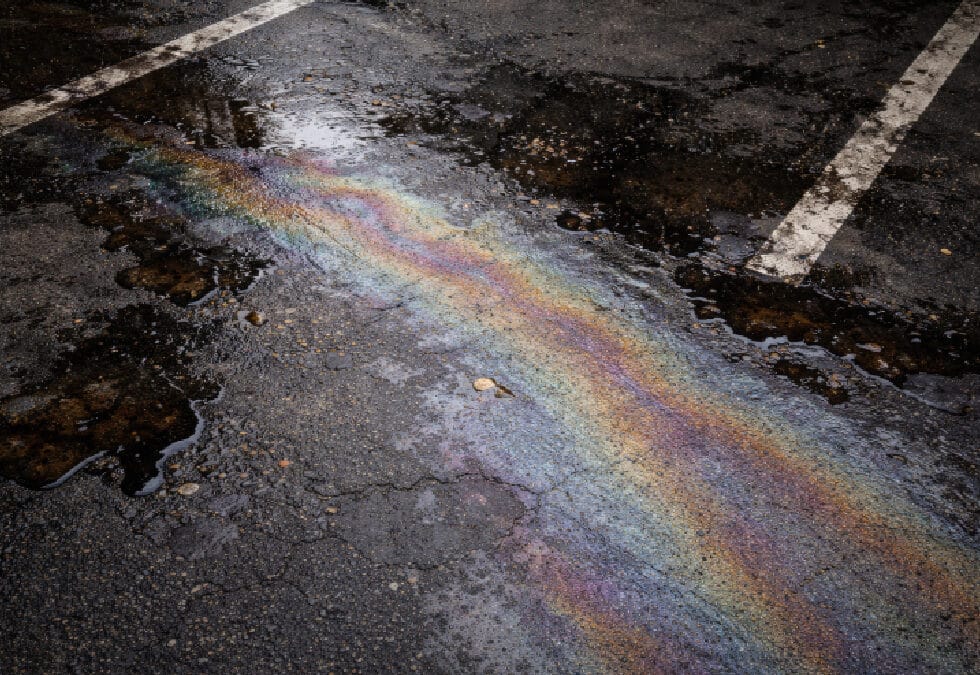
Oil stains should be removed from asphalt driveways using dish soap, warm water, and gentle scrubbing; harsh chemicals that can damage the surface are avoided. For fresh spills, excess oil is absorbed with cat litter or baking soda first… then cleaning is done with a mild detergent solution and soft brush.
Fast Facts:
- Fresh oil stains are 85% easier to remove than set-in stains
- Oil is broken down by dish soap without damaging asphalt binders
- Cat litter can absorb up to 3 times its weight in oil
- Asphalt surfaces may be damaged by pressure washing above 2,500 PSI
- Professional cleaning costs $150-300 for typical residential driveways
Understanding Oil and Asphalt Interaction
Asphalt is penetrated differently by oil stains than other surfaces because both materials share petroleum origins. When motor oil hits your driveway, it doesn’t just sit on top. The porous asphalt structure is seeped into by the oil, sometimes reaching depths of several millimeters within hours.
This was learned the hard way by a homeowner in Mississauga last summer. She ignored a small transmission leak for weeks; it would wash away with rain, she thought. By the time she addressed it, a permanent dark patch had been created by the oil that required professional treatment.
Immediate Response for Fresh Spills
Speed matters more than anything else with fresh oil spills. Cat litter works as an excellent absorbent because it’s designed to clump and contain liquids. A generous layer should be sprinkled over the spill and left to sit for 30 minutes.
Another option is offered by baking soda, though it’s less absorbent than clay-based litters. Bags of both materials are kept on hand by some contractors in Vaughan for emergency spill response. The key is removing as much oil as possible before deeper penetration into the asphalt structure occurs.
The Dish Soap Method
Dawn dish soap remains the most reliable cleaning solution for oil stains on asphalt. Oil molecules are broken down by its grease-cutting formula without attacking the asphalt binder. Two tablespoons should be mixed with a gallon of warm water.
The solution should be applied and left to sit for 15-20 minutes. Gentle scrubbing with a stiff brush is done, working in circular motions. Time is needed by the soap to emulsify the oil before scrubbing becomes effective. Thorough rinsing with clean water should be done afterward.
What to Avoid at All Costs
Asphalt surfaces will be damaged by gasoline, paint thinner, and other petroleum solvents. The same materials that hold your driveway together are dissolved by these products. Gasoline was used by one property manager in Brampton to clean oil stains and he ended up with soft, crumbling asphalt that required patching.
Problems are also caused by muriatic acid and other strong acids. The surface can be etched and the aggregate bond weakened by them. Mild, pH-neutral cleaners designed for asphalt surfaces should be stuck with.
Advanced Cleaning Techniques
For stubborn stains, a paste made from powdered laundry detergent and hot water should be tried. Organic compounds in motor oil are helped to break down by the enzymes in modern detergents. The paste should be applied, covered with plastic wrap, and left to work overnight.
Another professional-grade option is offered by steam cleaning. Hardened oil deposits are helped to liquefy by the high temperature. Steam units are used by many paving contractors across the Greater Toronto Area for commercial parking lot maintenance. Proper equipment and experience are required by the process though.
When to Call Professionals
Professional attention is often required by large stains covering more than a few square feet. Stains that resist home remedies can be removed by commercial-grade cleaners and specialized equipment. Surface sealing to prevent future staining is also included in professional cleaning.
If extensive oil damage across your driveway is being dealt with by you, I suppose professional assessment might be time to consider. Visit our website for a free estimate on cleaning services or driveway restoration options.
Mini-FAQ:
Q: Can I use bleach on oil stains? Bleach should never be used on asphalt driveways. Bleach was designed for fabric and hard surfaces, not petroleum-based materials. The asphalt binder can be broken down by it and permanent discoloration caused.
Q: What about commercial degreasers? Look, some work fine if they’re specifically labeled for asphalt. Many contain solvents that dissolve the surface layer though. A small hidden area should always be tested first.
Q: Can pressure washing remove oil stains? Fair point, but oil is rarely removed completely by pressure alone. The water pressure needs to stay under 2,500 PSI to avoid surface damage. It should be combined with proper cleaning solutions for better results. That still surprises people.
Q: Will oil stains come back after cleaning? Sometimes residual oil deep in the asphalt can resurface, especially during hot weather. Multiple treatments are often needed for older, penetrated stains.