
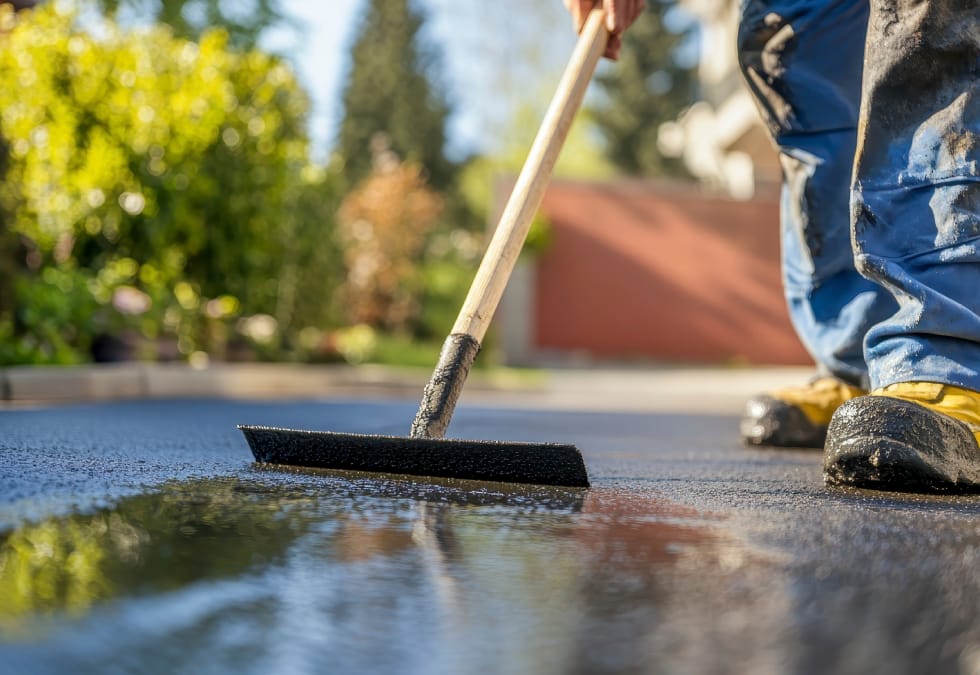
A wait of 24-48 hours is typically recommended before driving on a new asphalt driveway in the GTA, though temperature and thickness cause this to vary. The wait time can be extended to 72 hours by hot weather; earlier access might be allowed by cooler conditions. For best results, specific timing recommendations should be checked with your paving contractor.
Understanding Asphalt Curing in GTA Climate
Unique challenges for asphalt curing are created by the Greater Toronto Area’s weather patterns. Temperatures in Brampton and Mississauga can reach 30°C or higher during summer, which keeps fresh asphalt soft longer than expected. Time is needed by your new driveway to release heat and moisture before vehicle weight can be supported safely.
The only factor isn’t temperature. Curing time is influenced by humidity levels, wind conditions, and even the time of day when your driveway was paved. This was learned the hard way by a family in Vaughan when their SUV was parked after just 18 hours on a particularly hot July day. Permanent tire impressions that required partial resurfacing were the result.
The Science Behind Asphalt Hardening
Oils and binders that need time to set properly are contained in fresh asphalt. These materials are still flexible and vulnerable to pressure during the first 24-48 hours. The surface might look solid; underneath, though, the material is still adjusting to its final form.
A mix designed for our climate conditions is typically used by professional paving contractors in Toronto. Even the best materials need patience, however. The curing process happens gradually, with the surface becoming progressively harder over several weeks. In those first two days, I suppose, most of the critical hardening occurs.
Temperature’s Role in Curing Time
Curing time is extended significantly by hot weather because asphalt stays warm longer. Your driveway might need 72 hours or more before it’s truly ready for vehicles on days above 25°C. Heat from the sun is absorbed by the asphalt and released slowly, especially if it’s a thick application.
The initial curing process can actually be sped up by cooler weather. Spring and fall installations in Markham often cure faster than summer projects. Their own challenges are presented by extremely cold conditions, however, and special additives or techniques might be required.
Vehicle Weight Considerations
All vehicles aren’t created equal when it comes to new asphalt. Roughly 30-40 PSI of ground pressure is exerted by passenger cars, while 80 PSI can be exceeded by delivery trucks. This difference was discovered by a homeowner in Oakville when deep ruts in their day-old driveway were left by a moving truck.
Earlier safety than cars is usually provided by motorcycles and bicycles due to their lighter weight and smaller contact patches. Damage can be caused by even lightweight vehicles, though, if the asphalt hasn’t properly cured. Understanding how pressure and time interact is the key, in a way.
Signs Your Driveway Is Ready
Your asphalt has cured sufficiently when several indicators suggest it. The surface should feel firm underfoot without any give or flexibility. An impression with your thumb when pressing firmly shouldn’t be able to be made by you. From deep black to a more muted charcoal, the color often shifts as it hardens.
Temperature testing can help too. If the surface feels cool to the touch during midday, light traffic is probably ready for it. Infrared thermometers are sometimes used by professional contractors to check surface temperature before the all-clear is given. Interesting how that works.
Common Mistakes to Avoid
The biggest mistake homeowners make is rushing the process. Even if the surface looks ready, underlying layers might still be soft. Permanent depressions that are difficult to repair can be created by parking in the same spot repeatedly during the first week.
Fresh asphalt can be damaged by sharp turns, emergency braking, and parking with the wheels turned. Pressure in small areas is concentrated by these actions, increasing the risk of surface damage. Straight-line driving and gentle maneuvers work best during the first few weeks.
Professional Recommendations and Next Steps
Specific timing guidance based on your project’s conditions is provided by most reputable paving companies in the Greater Toronto Area. Factors like asphalt thickness, weather forecast, and your typical vehicle usage are considered by them when recommendations are made.
If a new driveway installation is being planned by you, timing expectations should be discussed upfront with your contractor. Planning accordingly and protecting your investment is helped by understanding the curing process.
We provide paving services across Ontario such as: Brampton, Toronto, Mississauga, and Vaughan
Mini-FAQ:
Q: Can I walk on my new driveway right away? Walking is generally safe after 4-6 hours, depending on temperature. Time is needed for the surface to cool and firm up first. High heels or sharp objects should be avoided during the first day.
Q: What happens if I drive on it too early? Permanent tire marks, surface depressions, or edge damage can be caused by early driving. Costly repairs are often required for these issues, which are often irreversible. Better safe than sorry.
Q: Does weather affect curing time? The curing process is slowed significantly by hot, sunny days. Wait times can also be extended by cold weather, though differently than heat. Temperature swings are handled by the asphalt gradually. That still surprises people.
Q: Are there different rules for heavy vehicles? Much longer wait periods are needed by trucks and delivery vehicles. Seven to fourteen days for heavy loads is recommended by some contractors. More than most realize is mattered by weight distribution.