
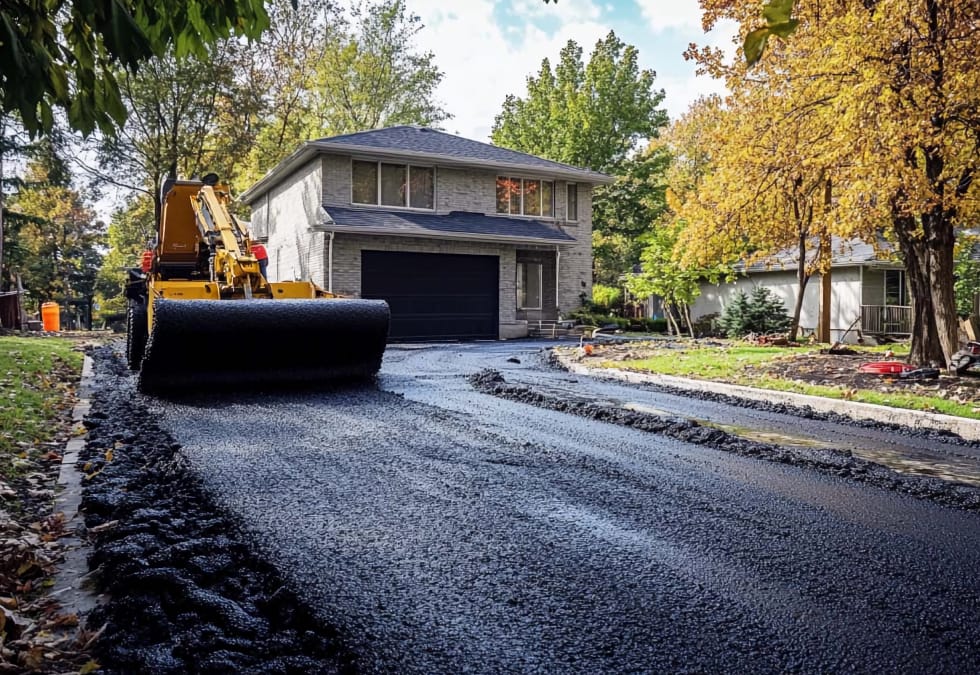
High-quality residential asphalt mix typically contains 5-7% asphalt cement binder, properly graded aggregates from coarse stone to fine dust, and maintains 3-5% air voids after compaction; mix temperature should reach 275-300°F during installation for optimal performance and longevity.
Fast Facts:
- Only 5-7% of the total mix weight is made up of asphalt cement
- Air void content should stay between 3-5% for residential applications
- Mix temperature needs to be 275-300°F when placed
- Stones from 19mm down to fine dust are included in aggregate gradation
- Proper compaction happens within 10-15 minutes of placement
Understanding Asphalt Binder Content
Everything gets held together by asphalt cement acting as the glue. Between 5-7% binder content by weight is typically used by contractors in residential applications across Vaughan and Mississauga. The mix ravels and loses stones over time when too little binder is used. But a surface prone to rutting gets created by excess binder, especially during hot summer months. Laboratory testing of the specific aggregates being used determines the exact percentage.
Aggregate Gradation Fundamentals
The backbone of any quality mix is formed by proper stone gradation. Coarse aggregates, intermediate sizes, and fine particles that work together are included in the blend. Structural strength is provided by coarse stones; fine materials fill the voids and create a smooth surface texture. The mix can be compacted properly while stability is maintained when gradation is well-designed. What’s called a “dense-graded” specification is followed by most residential mixes in the Greater Toronto Area.
The Role of Air Voids
Air void content might seem technical, but your driveway’s lifespan is directly affected by it. Freshly placed asphalt typically contains 7-9% air voids; after compaction, this should reduce to 3-5%. Water penetration of the surface is allowed by higher void content. Freeze-thaw damage during Toronto winters is led to by water penetration. The surface can become unstable and prone to shoving when void content is lower.
Temperature Control During Mixing
Temperatures between 300-325°F at the plant are used to produce hot mix asphalt. By the time trucks arrive at your Brampton or Oakville home, the temperature usually drops to 275-300°F. Proper workability during placement is allowed by this temperature range; it also ensures the mix can be compacted to the required density. Cold mix becomes stiff and difficult to work with. The entire process is monitored for temperature throughout.
Compaction Requirements
The right equipment and timing are required to achieve proper density. Within 10-15 minutes of placement, compaction typically begins. The mix needs to stay hot enough to allow particle movement under the roller. Excess air voids are eliminated and a stable surface is created by proper compaction. I suppose premature failure through raveling and cracking happens with under-compacted asphalt; aggregate breakdown and surface instability can be caused by over-compaction.
Quality Control Testing
Each batch is ensured to meet specifications before delivery through laboratory testing. Gradation analysis, binder content verification, and density measurements are included in tests. Before any material gets produced for your project, mix design approval happens. Temperature and compaction levels are verified through field testing that continues during placement. The workmanship and integrity you expect from professional installation is helped by these quality measures.
Choosing the Right Mix for Your Project
Different specifications than commercial parking lots or roadways are required by residential driveways. Expected traffic loads, climate conditions, and aesthetic preferences are considered by the mix design. Your specific needs are evaluated by a qualified paving contractor who recommends the appropriate mix. Proper installation techniques are also ensured to be followed throughout the process. For reliable guidance on your driveway project, visit our website to schedule a free estimate.
Mini-FAQ:
Q: How much asphalt cement should be in a good driveway mix? Look, between 5-7% asphalt cement by weight is contained in most quality mixes. Too little and you get raveling. Too much creates a soft surface that ruts easily.
Q: What’s the ideal air void percentage? Air voids should typically fall between 3-5% after compaction is completed. Water penetration and freeze damage are allowed by higher percentages.
Q: Does aggregate size matter for residential driveways? The gradation gets designed specifically for surface courses. Stones range from 19mm down to fine dust particles. Specific gaps are filled by each size.
Q: Why is mix temperature so important? Hot mix asphalt needs to stay workable during placement and compaction. Below 275°F, proper density becomes difficult to achieve. Simple as that.