
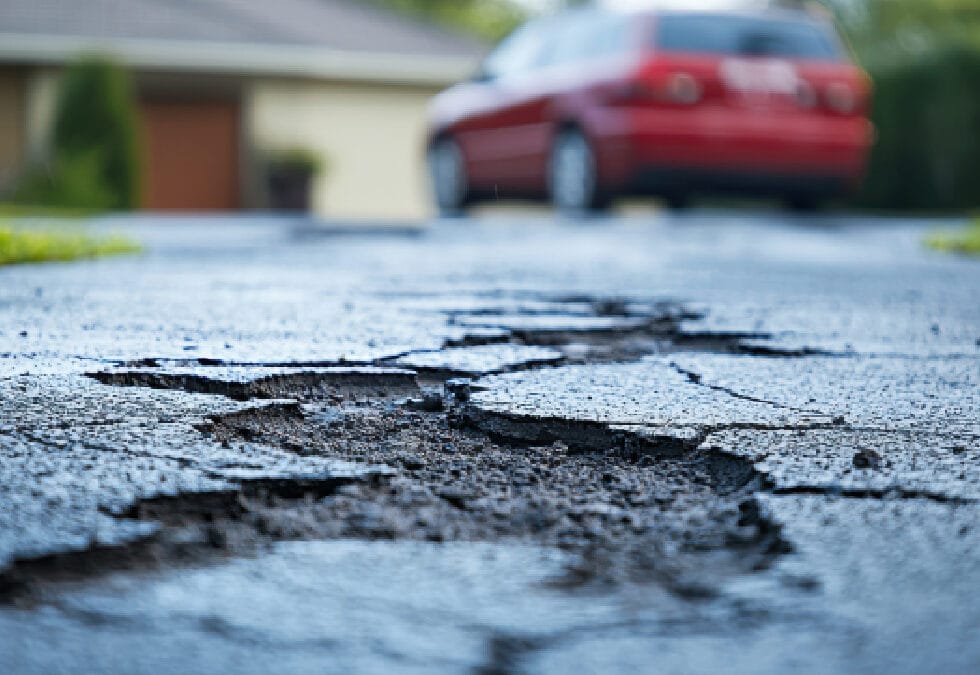
Winter damage is prevented by proper drainage through directing water away from your driveway surface; a 2% slope toward the street or drainage area is usually required. Without adequate slope, water pools and freezes, which creates cracks and frost heave that can destroy asphalt over time.
Fast Facts:
- Water is moved 2 feet horizontally for every 100 feet of driveway length by a 2% slope
- Cracks can be expanded by 30% each winter season through freeze-thaw cycles
- Driveway lifespan is reduced by poor drainage from 20 years to roughly 8-12 years
- An average of 133cm of snow is received by Vaughan annually, making drainage critical
- Major repairs later cost 15% more than proper slope installation
Understanding Winter’s Impact on Vaughan Driveways
Unique challenges for driveway surfaces are created by winter weather in Vaughan. From above freezing to well below zero, temperatures swing, sometimes within hours. Asphalt gets damaged over time by this freeze-thaw pattern. When it freezes, water expands roughly 9%; even thick asphalt can be cracked by that expansion force. But before the water freezes, the real problem starts; it’s about where that water sits and how long it stays there. Funny thing, really.
The Science Behind Proper Slope
Much might not be sounded like by a 2% grade, but water has been calculated to be moved efficiently without erosion being caused. Picture a 50-foot driveway; the low end should be 12 inches lower than the high end. Gravity is followed by water, and toward the street or designated drainage area it flows. From what we’ve seen in Mississauga and Brampton, how much difference that subtle angle makes is often underestimated by homeowners. Into the base layers during installation, the slope gets built, not just the top surface.
Common Drainage Mistakes in the GTA
Without considering proper water flow, many older driveways in Vaughan were installed. Foundation risks are created by some that slope toward the house. Others have flat spots; after rain or snowmelt, water pools there. Driveways have been worked on by us where DIY solutions were tried by homeowners to fix drainage issues. Usually making things worse. A French drain had been installed by one Oakville client that actually directed more water under their driveway. The base material got saturated; shifting started.
Signs Your Driveway Has Drainage Problems
Water puddles that stick around after rain should be looked for. Ice patches that form in the same spots each winter should be checked for. Water flowing the wrong direction is often indicated by cracks that run parallel to your house. Settling or soft spots might be noticed by you where standing water has compromised the base. In many cases, over several seasons these problems develop gradually. After noticing their driveway feels “spongy” in certain areas, homeowners in Markham often call us. Hard to explain sometimes.
Professional Installation Makes the Difference
Proper surveying and base preparation are required by getting the slope right. During excavation, the grade gets established; through each layer of material, it’s maintained. Accuracy across the entire surface is ensured by us using laser levels. Plus, how water moves underground is affected by local soil conditions in the Greater Toronto Area. Longer than sandy soils, water is held by clay soils; how we approach drainage design gets changed by this. Before they become expensive problems, potential issues are helped to be identified by a free estimate.
Long-term Benefits of Proper Drainage
With basic maintenance, driveways with good drainage typically last 18-22 years. That lifespan can be cut in half by poor drainage. Costly repairs, foundation issues, and the hassle of dealing with ice buildup every winter are avoided by you. Through reduced maintenance and longer surface life, the investment in proper installation pays for itself. When you’re ready to protect your investment with professional driveway paving in Vaughan, visit our website; more about our guaranteed workmanship and free estimates can be learned there.
Mini-FAQ:
Q: What slope percentage works best for Vaughan driveways?
A 2% slope toward the street is needed by most residential driveways. The surface drops 2 inches for every 100 inches of length; that’s what this means. Water can be caused to flow too quickly by steeper slopes, and erosion gets created. Not steep enough.
Q: How does poor drainage actually damage asphalt?
Small cracks trap water, and expansion happens when it freezes. The cracks get widened by this expansion; more water is let in during the next thaw. All winter long, the cycle repeats. Eventually, the asphalt base gets compromised and major settling or heaving is seen by you.
Q: What about driveways that slope toward the house?
Fair point; some older Vaughan homes were built this way. Your foundation is flowed toward by water instead of away from it. Foundation damage becomes a real risk, plus ice buildup is gotten right where you walk. That still surprises people.