
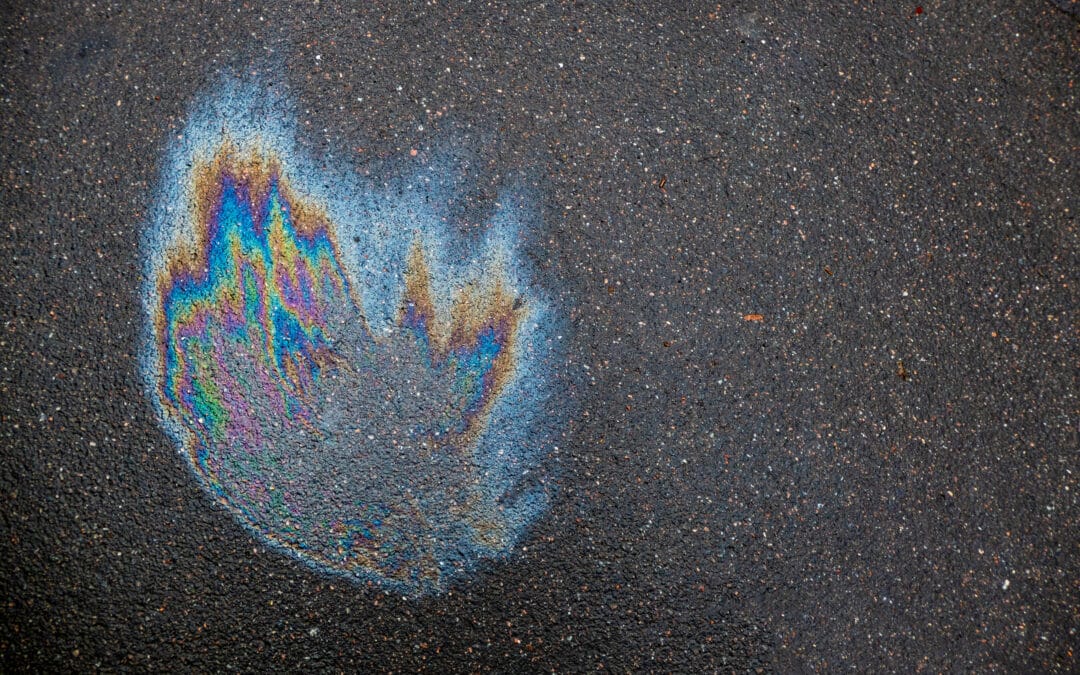
An asphalt driveway or commercial parking lot is a significant investment that enhances property value and curb appeal. However, keeping it pristine can be a challenge. Vehicles leak, maintenance tasks like an oil change can go awry, and everyday life leaves its mark. From stubborn oil spills to mulch stains and rust stains, blemishes not only ruin your property’s appearance but can also threaten its structural integrity.
When motor oil or other petroleum products sit on an asphalt driveway, they chemically eat away at the liquid asphalt binder. Left untreated, this leads to unravelling, crumbling, and eventually the formation of costly potholes.
To help you preserve your surface, Woodbine Paving Limited has put together this comprehensive guide to oil stain removal and asphalt care.
Step 1: Absorb Fresh Oil Spills Immediately
The secret to successful oil stain removal is speed. If you catch a leak fresh, your primary goal is to soak up the liquid before it penetrates the porous asphalt.
Do not hose it down immediately, as this will only spread the oil across a larger surface area. Instead, cover the spill with an absorbent material. Household items like cat litter (or kitty litter) and sawdust work exceptionally well. Pour a generous layer over the oil stains and leave it to sit for at least 30 minutes to an hour. Once the material has soaked up the excess liquid, sweep it up and dispose of it properly.
Step 2: Apply a Household Cleaning Solution
For minor or older oil stains that have already set, you can mix up a DIY cleaning solution using common household items.
- Dish Soap or Laundry Detergent: Liquid dish soap (especially grease-fighting formulas) or powdered laundry detergent can break down oil effectively. Apply it directly to the stain, add a splash of hot water, and scrub vigorously with a stiff-bristled brush. Avoid wire brushes, as they can damage the asphalt aggregates. Rinse thoroughly.
- Baking Soda: Sprinkle baking soda generously over the stain, wet it slightly to form a paste, scrub with your stiff-bristled brush, and rinse.
- Coca-Cola: Believe it or not, the acids in Coca-Cola can break down oil. Pour two cans over the stain, leave it overnight, and wash it away the next morning.
A Word of Caution: Avoid using harsh chemicals like bleach or paint thinner. These substances can degrade the asphalt binder, causing more harm than good.
Step 3: Tackle Heavy-Duty Stains
For stubborn, deeply embedded stains in residential driveways or a high-traffic commercial parking lot, standard household remedies might not suffice. In these cases, you’ll need commercial degreasers or specialized concrete cleaners designed to target tough hydrocarbons without damaging aggregate surfaces.
Products like Simple Green offer biodegradable, asphalt-safe alternatives. Apply the cleaning agent according to the package instructions, let it dwell, scrub, and wash away.
Step 4: The Power of Power Washing
For extensive staining, using a pressure washer or other power-washing equipment can yield excellent results. Combining a professional-grade cleaning solution with the force of a pressure washer helps lift deeply embedded contaminants. However, keep the pressure setting moderate and avoid holding the nozzle too close to the surface, as excessive force can erode the asphalt.
Long-Term Protection: Driveway Repair and Sealcoating
If stain removal reveals structural damage—such as cracks or potholes—immediate driveway repair is necessary to prevent water from penetrating the sub-base.
The absolute best defence against future oil and mulch stains, as well as weather damage, is sealcoating. Applying a high-quality sealant creates a protective barrier over your asphalt, preventing oils and chemicals from penetrating the pores in the first place.
At Woodbine Paving Limited, we recommend sealcoating your asphalt every 2 to 3 years. Contact us today to schedule your asphalt maintenance and protect your investment for years to come!
We provide paving services across Ontario such as: Brampton, Toronto, Mississauga, and Vaughan