
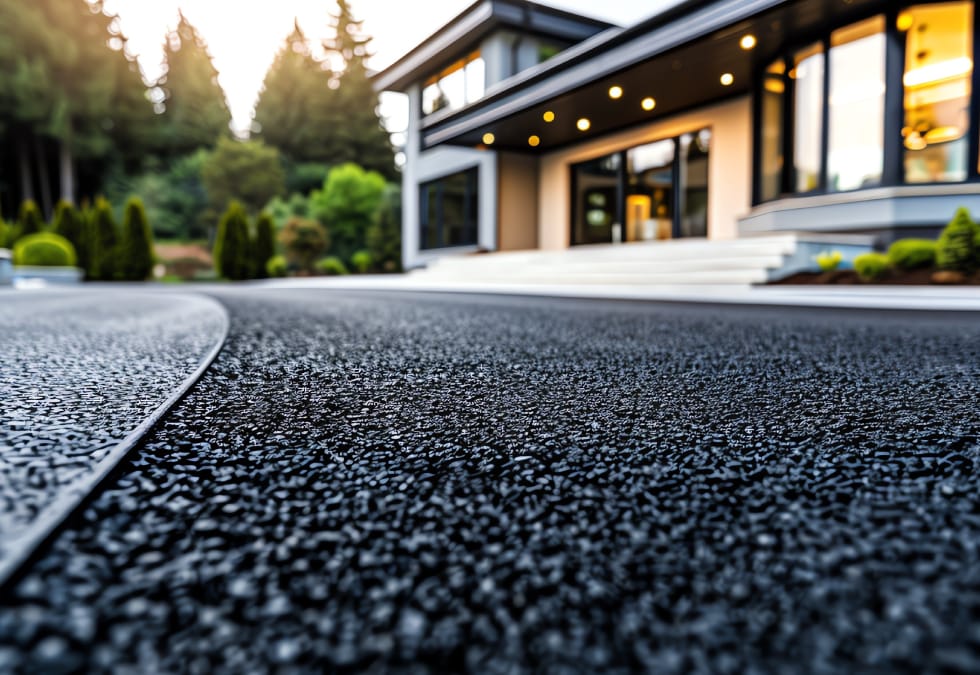
Long-term asphalt damage is usually prevented 80% of the time by proper grading and drainage directing water away from the pavement surface; without it, cracking, settling, and expensive repairs within 3-5 years are caused by water infiltration.
Fast Facts
- A 1-2% grade (roughly 1/4 inch per foot) should be maintained for proper slope to ensure adequate drainage
- Asphalt lifespan can be reduced by 60% when standing water is present compared to well-drained surfaces
- Custom grading is required by most Vaughan properties due to clay soil conditions
- 90% of foundation water issues are prevented by professional drainage assessment
- An average of $8,000 in premature repairs is what inadequate grading costs homeowners
Understanding Vaughan’s Unique Drainage Challenges
Predominantly clay soil is what Vaughan sits on, which creates specific challenges for asphalt paving projects. Water isn’t absorbed well by clay, so proper surface grading becomes even more critical here than in other parts of the GTA. Over 6,000 projects have been worked on by us across Mississauga, Brampton, and Vaughan; the clay soil issue comes up consistently. When the ground can’t be penetrated by water, it has to go somewhere. Without proper slope, that somewhere is usually under your asphalt. Premature cracking and costly repairs that could have been avoided with proper planning? That’s the result.
The Science Behind Proper Grading
Making water run off your driveway isn’t just what grading is about. Your property’s natural drainage patterns, nearby structures, and local building codes are taken into account by the slope calculation. A minimum 1.5% grade is what we aim for in most Vaughan neighborhoods, though steeper slopes often work better. A clear path away from your home’s foundation and toward appropriate drainage areas is needed by the water. This was learned the hard way by one homeowner in Maple when runoff was sent directly toward his basement by poor grading. After the repair and proper regrading, he hasn’t had a water issue since.
Common Grading Mistakes We See
The grading phase is rushed by many contractors, but everything that follows is determined by this step. Inadequate base preparation is probably the biggest issue encountered by us in Vaughan. Low spots where water collects are created when the base material gets compacted unevenly. The property’s natural water flow being ignored involves another common problem. A commercial parking lot in Brampton was recently fixed by us where the natural slope had actually been graded against by the original contractor. Three different areas had water pooled in them, creating safety hazards and accelerated deterioration.
Drainage Solutions That Actually Work
Additional measures are often required by effective drainage beyond surface grading. Clay soil conditions work well with French drains, especially around the perimeter of larger paved areas. Catch basins are also installed by us in strategic locations to handle heavy rainfall. Persistent flooding issues were had by one apartment complex in Oakville until a comprehensive drainage system was added by us alongside their parking lot repaving. Problems they’d dealt with for years were solved by the combination of proper grading and strategic drainage infrastructure. Sometimes, to be fair, the solution is simpler than expected.
The Cost of Getting It Wrong
Your asphalt isn’t just damaged by poor drainage – your entire property is affected by it. Foundation issues, landscape damage, and even basement flooding have been seen by us traced back to inadequate paving drainage. Cracks in her three-year-old driveway were what a residential client in Vaughan recently called us about. Proper base grading had been skipped by the original contractor to save time. By the time the damage was assessed by us, the entire foundation layer had been compromised by water. Nearly as much as a complete replacement would have initially cost was what the repair cost. According to available data, roughly 10-15% is added to project costs by proper grading, but problems that cost 3-4 times more to fix later are prevented.
What Proper Installation Looks Like
A thorough site assessment is where professional asphalt paving in Vaughan starts. Existing drainage patterns are examined by us, soil conditions are tested, and the optimal grade is planned before any excavation begins. Removing unsuitable material, adding proper aggregate, and compacting in lifts to achieve the right density is what the base preparation involves. Proper slope is checked for by each layer before we move to the next step. The same careful approach is followed by the asphalt application – the planned grade is maintained while smooth, even coverage is ensured. Most long-term problems are prevented by this attention to detail during installation.
Making the Right Choice for Your Property
When you’re ready to move forward with your asphalt paving project, non-negotiable elements of any quote should be proper grading and drainage. Their approach to site drainage and base preparation should be asked about to potential contractors. Potential issues are identified by a professional assessment before they become expensive problems. Free estimates that include detailed drainage planning for every project across the Greater Toronto Area are provided by us at Woodbine Paving Limited. Our commitment to proper installation techniques is backed up by our 10-year warranty. Visit our website to schedule your consultation and see how your investment is protected for decades to come by proper grading.
Mini-FAQ
Q: Why does water damage asphalt so quickly? Small cracks are seeped through by water, which then freezes during Vaughan’s harsh winters. These cracks are expanded into larger problems by the freeze-thaw cycle. The base material gets compromised eventually.
Q: How much slope does my driveway actually need? At least a 2% grade is needed by most driveways to work properly. The surface drops about 1/4 inch for every foot of length; that’s what it means. Steeper slopes work fine too.
Q: What happens if my contractor skips proper grading? Pooling water will probably be seen by you within the first year. Cracks follow soon after, especially around the edges where water collects.
Q: Can drainage issues be fixed after paving? Partial removal and regrading is what you’re looking at. Much better to get it right the first time.