
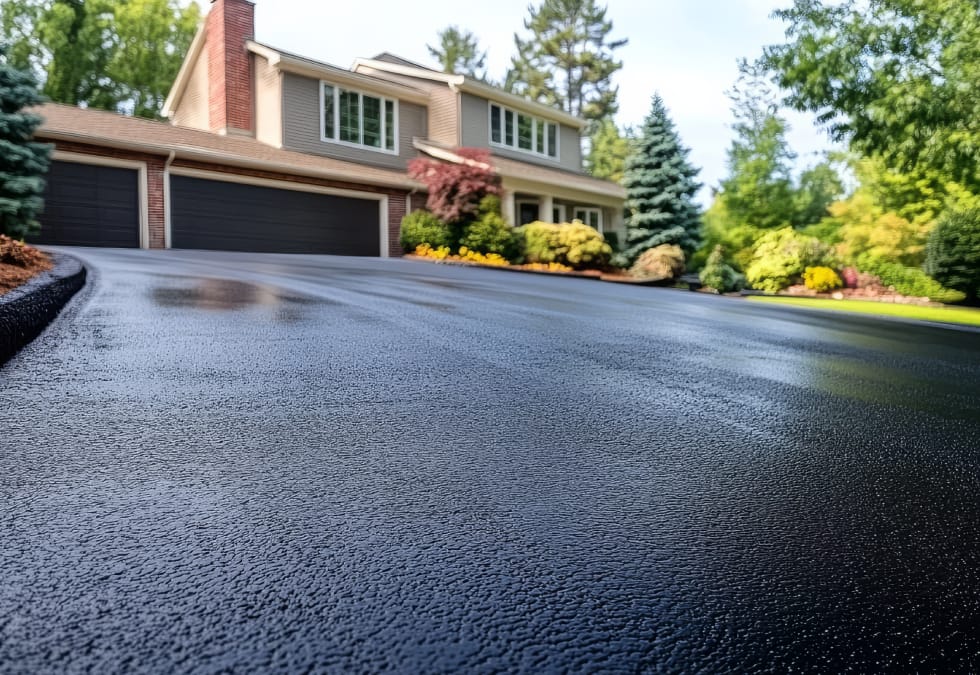
Base preparation usually accounts for 70-80% of an asphalt driveway’s lifespan, though poor foundation work can reduce durability by half or more. A stable platform that prevents cracking and settling over time is created through proper excavation, drainage setup, and compaction. For reliable results, consider getting a free estimate from experienced paving contractors.
Fast Facts:
- Asphalt life can be extended from 15 to 25+ years with well-prepared bases
- 60% of premature asphalt failures in the GTA are caused by poor drainage
- Base thickness should be 6-8 inches for residential driveways
- 90% of settling issues are prevented by proper compaction
- Special base considerations are required by clay soil conditions in Toronto
Why Base Preparation Matters More Than You Think
What you see is just the top layer of a much deeper system. Underneath, 6-8 inches of carefully prepared base material sits there doing the real work. This foundation carries the weight of your vehicles; it handles water drainage too. When contractors skip steps here, problems show up fast.
A homeowner in Vaughan learned this the hard way. Their driveway looked perfect for two years, then a series of cracks developed that spread like spider webs. The issue wasn’t the asphalt quality, to be fair, but poor compaction underneath.
Excavation Sets Everything in Motion
Unstable soil gets removed through proper excavation, and the right depth for your base layers is created. In many cases, this means digging down 10-12 inches from the final surface level. Any drainage issues that need addressing are also revealed by the excavation process.
Clay soil conditions around Toronto require extra attention during this phase. Clay expands when wet and contracts when dry; your entire driveway can be shifted by this. How to handle these local soil challenges is something experienced contractors know.
Drainage Makes or Breaks Your Investment
Water is asphalt’s biggest enemy. Drainage problems start during base preparation. The base gets graded with a slight slope to move water away from your home’s foundation. Low spots where water collects and eventually works its way through the asphalt are created by poor grading.
From what we’ve seen, more driveway failures are caused by drainage issues than any other factor. The base preparation phase is when proper slopes and drainage systems get installed. Miss this opportunity; you’re dealing with water damage for years.
Compaction Creates Long-Term Stability
Base material gets compacted in layers using heavy equipment. Each layer gets compressed to 95% density or higher. Air pockets are eliminated by this process, and a solid platform for the asphalt layer is created.
Settling is what inadequate compaction leads to, which shows up as depressions and cracks in your finished driveway. A property manager in Mississauga told us about a parking lot that developed serious settling issues because the base work was rushed. The repairs cost three times what proper preparation would have. Hard to explain sometimes.
Material Selection Affects Performance
Crushed limestone and recycled concrete aggregate are commonly used base materials in the Greater Toronto Area. Good drainage characteristics are provided by these materials, and they compact well. How well it compacts and performs over time is affected by the size and gradation of the aggregate.
Different base materials are required by different projects. Smaller aggregate sizes are typically used by residential driveways, while larger stone might be needed by commercial applications. Which materials work best for your specific situation should be explained by your contractor.
Thickness Specifications Matter
Expected traffic loads and soil conditions determine base thickness. 6-8 inches of compacted base material are usually needed by residential driveways. Thicker bases are required by commercial applications to handle heavier vehicles and more frequent use.
Skimping on base thickness is false economy. A thin base will fail under normal loads; expensive repairs or complete replacement will be required. The upfront cost of proper base thickness pays for itself through extended driveway life.
Getting Professional Base Preparation
Experience, proper equipment, and attention to detail are required by quality base preparation. The work involves excavation, grading, material placement, and compaction. Your driveway’s long-term performance is affected by each step, I suppose.
At Woodbine Paving Limited, over 6,000 projects across the GTA have been completed by us with proper base preparation techniques. Confidence in our foundation work is reflected by our 10-year warranties. For reliable asphalt installation with proper base preparation, visit our website for a free estimate.
Mini-FAQ:
Q: What happens if the base isn’t prepared correctly? Problems will start showing up in the asphalt within the first few years. Cracks appear along edges, water collects in low spots, and the whole surface begins to shift. Poor base work is usually visible by the second winter.
Q: How deep should the base preparation go? 6-8 inches of compacted base material are needed by most residential driveways, though clay soils around Brampton sometimes require more. The excavation depth is calculated based on your specific soil conditions.
Q: How long does proper base prep take? The base work takes longer than laying the asphalt itself. A typical driveway base gets prepared over 1-2 days; the asphalt goes down in a few hours. Rushing this step never works out well.
Q: What materials work best for base preparation? Crushed limestone or recycled concrete aggregate work well in most GTA locations. The material gets compacted in layers to create a stable foundation. Different approaches are required by different soil types.