
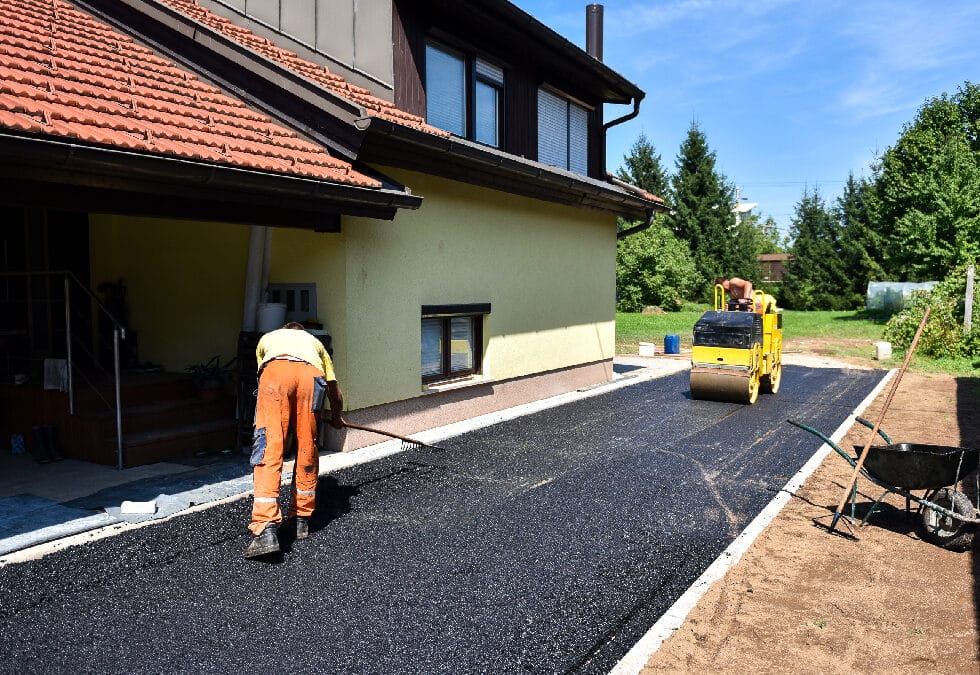
New asphalt can usually be driven on after 24-48 hours, though waiting up to 72 hours may be required by cooler temperatures. When walked on, the surface should feel firm; parking heavy vehicles should be avoided for at least one week to prevent permanent impressions.
Fast Facts:
- Light vehicle traffic is typically allowed on new asphalt after 24-48 hours
- A minimum wait of 7-14 days is required for heavy trucks or RVs
- The required waiting time can be doubled by temperatures below 10°C
- Up to 80% of premature surface damage is prevented by proper curing
- Specific timing based on weather conditions is usually provided by professional contractors in the GTA
Understanding Asphalt Curing Times
More than just waiting is involved in the curing process for new asphalt. What’s happening beneath the surface needs to be understood. Cooling starts immediately when hot asphalt is laid on your Mississauga or Brampton driveway. But time is needed for the chemical bonds that create a durable surface to form properly.
The biggest role here is played by temperature. Light traffic might be ready for asphalt in 24 hours on a warm summer day in the GTA. That timeline is extended during cooler spring or fall weather. Three full days have been waited by homeowners in Vaughan that we’ve seen during particularly cool spells.
Your new asphalt’s thickness also matters. Two to three inches of asphalt over a prepared base is typically what a standard residential driveway gets. Longer curing times all the way through are required by thicker applications.
Weather Conditions in the Greater Toronto Area
Some unique challenges for asphalt curing are presented by Toronto’s climate. The process can be slowed by humidity levels, especially during those muggy summer days. Plus, how evenly the surface cures is affected by temperature swings between day and night.
Longer times are often taken by spring installations because ground temperatures haven’t warmed up yet. Cool conditions are maintained by the base beneath your new asphalt, which slows the entire curing process. Similar challenges are faced by fall work as temperatures drop.
These factors are accounted for by professional contractors when scheduling work. Laying asphalt will often be avoided by them when temperatures are expected to drop below 10°C within the first 48 hours. Makes sense, really.
Signs Your Asphalt Is Ready
More than just watching the clock is required for determining when it’s safe to drive. A firm feeling should be provided by the surface when you walk on it. Any give or soft spots under your feet shouldn’t be present.
Visual cues help too. Very dark is how fresh asphalt starts out, and gradual lightening occurs as it cures. Less shiny and more matte in appearance is what the surface becomes, as you’ll notice. Solid and well-bonded should be how the edges where the asphalt meets existing surfaces feel.
Temperature testing works as well. Light traffic has likely been sufficiently cooled for by the asphalt if you can comfortably place your hand on the surface for several seconds without it feeling warm.
Heavy Vehicle Considerations
One thing are regular cars and light trucks. Much more patience is required by heavy vehicles. At least a week, sometimes longer, should be how long RVs, delivery trucks, and construction equipment stay off new asphalt.
All the difference is made by the weight distribution. Its weight across four relatively small contact patches is spread by a car. Much more weight in the same area is concentrated by a heavy truck. Permanent depressions can be created by this even in properly cured asphalt.
The hard way is how this lesson is learned by many homeowners in Oakville and Markham when they allow a delivery truck onto their new driveway too soon. Professional repair is often required by the resulting tire marks or depressions. To be fair, most people don’t realize the risk.
Protecting Your Investment
The integrity of your new asphalt surface is protected by proper curing. Premature wear, cracking, or surface damage that shortens the lifespan of your driveway can be led to by rushing the process.
Blocking access with cones or temporary barriers should be considered if you’re concerned about family members or visitors driving on the surface too early. Understanding is shown by most people when you explain the situation.
Guidance on proper curing times is included in professional installation. What to expect based on the specific conditions during your installation will be walked through by experienced contractors. What works and what doesn’t across thousands of projects in the GTA has been seen by them.
Getting Professional Guidance
Slightly different is every installation. Curing times are influenced by weather conditions, asphalt mix, and site-specific factors. That’s why such a difference is made by working with experienced local contractors.
Clear guidance on timing based on the specific conditions during your project is provided by us at Woodbine Paving Limited. Over 6,000 projects across Toronto, Mississauga, Brampton, and Vaughan have been completed by our team. How local weather patterns affect asphalt curing is known by us.
Discussion of timing and what to expect during the curing process is included in getting a free estimate. More about our approach to residential paving projects in the Greater Toronto Area can be learned by visiting our website.
Mini-FAQ:
Q: What happens if I drive on asphalt too early? Permanent tire marks, small depressions, or surface shifting can be caused by driving too soon. Patching or resurfacing may be required for these issues, which are often irreversible. Not worth the risk.
Q: Can I walk on new asphalt right away? After 2-4 hours, light foot traffic is generally safe, depending on temperature. A solid feeling underfoot should be provided by the surface. High heels or sharp objects that might puncture the surface should be avoided.
Q: Does cold weather affect curing time? Fair point. The curing process is significantly slowed by cold temperatures. What takes 24 hours in summer might need 72 hours when it’s below 10°C in Toronto or Vaughan. That still surprises people.
Q: Should I water my new asphalt to help it cure? Look, problems can actually be caused by watering asphalt, and it doesn’t help. Cooling and chemical bonding, not hydration, are what the curing process involves. Let it cure naturally.